- Have any questions? | www.nada.co.za
- info@nadadpp.co.za

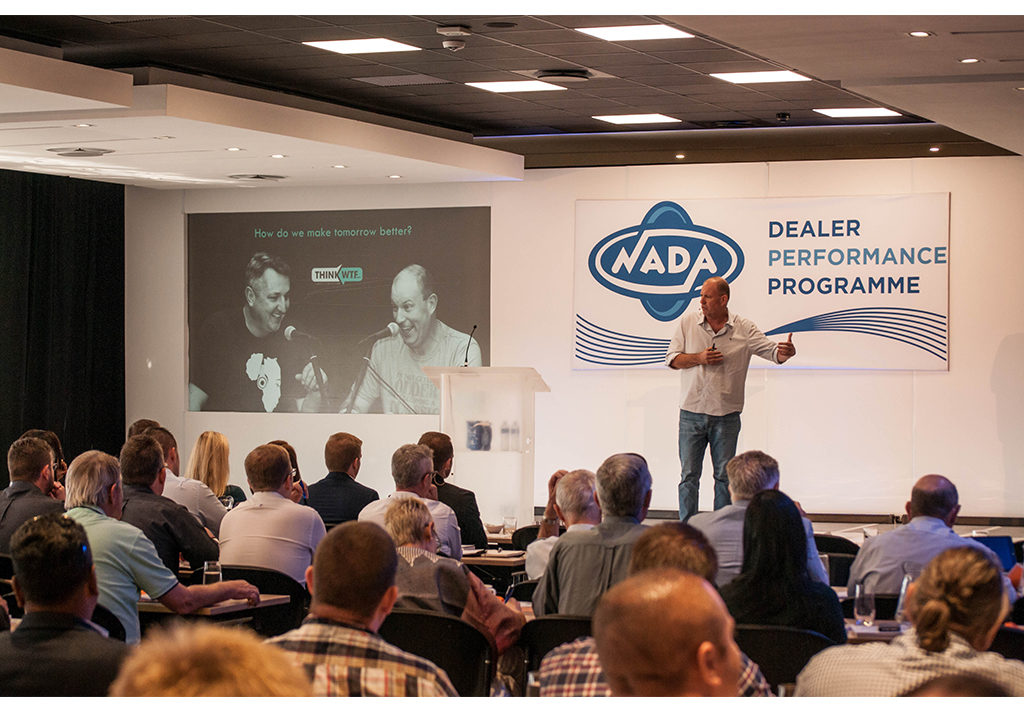
A record number of delegates attended the National Automobile Dealers’ Association Dealer Performance Conference (NADA DPP) which took place at the Kyalami Conference Centre in Midrand on 7 March, 2019.
The conference is an annual opportunity for dealer principals and key operational staff from all over the country to come together to network, learn and socialise.
The NADA Dealer Conference prides itself on hosting leaders of the industry as well as specialists in a particular field of influence, and this year was no different. Themed “Automotive Retailing 2020, Dealership performance for the next decade”, the 2019 NADA DPP Conference programme was designed to equip dealers with the tools and knowledge they require to deal with the ‘shifting ground’ in which they operate. Five authoritative speakers covered the changing nature of the modern automotive retail playing field in the age of disruption.
Mark Dommisse, Chairman of NADA, opened the proceedings by thanking the sponsors and attendees for making the time to attend this important conference.
“None of this would have been possible without our generous sponsors. Budget, Britehouse, Cars.co.za, Lightstone, NADA, Sewells MSXI, Traka Automotive and WesBank, thank you to all for your support, and for helping to make the NADA DPP Conference such an exciting and productive event,” said Dommisse.
Dommisse drew inspiration from Alice in Wonderland and the popular science-fiction movie The Matrix to carry his message through – How will you choose? The red pill or the blue pill?
“We have a choice,” said Dommisse. “We can choose to take the red pill, which has an uncertain future but is exciting and challenging. Or we can choose the blue pill, return to our dealerships and continue working in a world of sameness without want or fear of what the future holds.”
Despite the current tough economic climate in the retail motoring space, Dommisse encouraged the dealers to “choose the red pill and continue on this exciting journey.”
“Adaptation is the key to survival and I urge you to interrogate your offering, immerse yourself in the age of disruption and consider what your unique offering is to the customer.”
“Work on what will encourage an existing or prospective customer from choosing your dealership above others. Explore the new environment you find yourselves in and draw a map for a new or different digital way of operating.”
Co-founder of What’s the Future (WTF), Michael Cowen, was the first guest speaker at the conference. Cowen is a renowned entrepreneur, digital guru and corporate advisor.
“How do we make tomorrow better?” asked Cowen. “Write a new playbook, embrace disruption but importantly, create an environment of trust within your operations.”
He noted that the biggest unseen disruptor in today’s environment is that of trust. Media is no longer trusted; fake news is a daily occurrence. Large corporate institutions are being questioned and we are faced with digital dictators in the form of Facebook on a daily basis.
“We are moving into a peer to peer trust economy and our businesses need to build for trust in the digital age. Understand and focus on your customer’s why, continually test and reduce your customer experience friction – both digital and non-digital. And importantly build trust, or go bust,” he concluded.
Meet the Millennials, a team of young Dimension Data graduates who personify the millennial market, took the audience on a car buying experience from a millennial point of view, providing frank and thought-provoking insight into their buying behaviour and expectations. The group of five millennials certainly ruffled some feathers, forced everyone to think differently and changed things up with their views on how millennials want to buy cars.
David Graff, from MSX International (MSXI) hails from the US and is currently responsible for the company’s sales and marketing strategy and execution for global automotive accounts. Before joining MSXI, David served as the automotive managing director at Microsoft Corporation and was a senior manager with Ernst and Young’s automotive consulting practice.
Graff’s presentation revolved around Navigating Change. The future of car sales is moving to the Omni Channel, as we see car-buying behaviour changing. Almost 50% of buyers begin online. Millennials spend up to 16 hours researching vehicles online, 75% identify a car before getting into the dealer and 45% of their biggest frustration is relying on sales people. Graff noted that OEMs in the US will launch 71 new products in 2021, powertrains are becoming more complex (Gas, Ethanol, BEV, PHEV) and technology in vehicles is increasing.
“We need to extend the online journey into the dealership. Sell technology with technology, go where the customers go. Shopping malls are excellent opportunities to take your showroom to the customer,” continued Graff. “Leverage technology in the service lane. Consider online vehicle scheduling and electronic multi-point vehicle inspection, sell accessories with a digital view and mine the data available to you.”
The message from Graff that resonated loudly with the audience, was that dealers are the backbones of many communities and are not going away.
“Dealers create employment, provide sponsorship to schools, uplift communities in need, provide youth employment, train people to become entrepreneurs, and contribute to paying taxes which have a direct impact on the fiscus. The future is bright. Embrace it as there is tremendous opportunity for those who do,” concluded Graff.
Chris de Kock, CEO of WesBank and renowned automotive industry authority, also spoke at the event. He advocated the importance of dealers within the industry and his message was loud and clear: Dealers are here to stay and WesBank is perfectly poised to work with them.
The final speaker for the day was Scott Gibson, Group Executive, Digital Business, Dimension Data. Digitalisation versus Digitisation, they sound the same, but do they mean the same thing? No, not even close. The two are very different, he said.
Digitisation is the process of converting data or information into digital format, whereas digitalisation is the use of digital technologies to change a business model and provide new revenue and value-producing opportunities. It mostly realigns the processes while also introducing new methods to operate in the digital space.
Digitalisation is about embracing the new world we live in, the modern requirements of customers, employees and suppliers, and providing them with a Digital Age experience. Digital is delivering value, but it’s not easy. Rethink your process and remember to consider three key elements when doing so; people, technology and processes.
In closing, Gibson noted that digital should be seen pragmatically and as a journey rather than an event.
“Data gives you the ability to tell a different story. The world of digital is best leveraged through data and the insights you are able to garner. I encourage you to be clear on where the value lies – for your customers and for your people. Embrace it and you will see the benefits in the long run,” he concluded.
From the discussions heard in the open areas outside the conference room it can be said that the day was a huge success. Everyone who attended the conference certainly walked away armed with insights and felt uplifted from the day’s proceedings.
Download Presentations Below
- Meet the Millennials
- Michael Cowen
- Scott Gibson
- Please contact John Templeton from Sewells MSXI for the presentation done by David Graff – jtempleton@sewells-msxi.com or 083 276 2990
